
When people think about healthcare design, they often picture hospitals, fast-paced, highly clinical environments built for efficiency and acute care. Not every healthcare facility design is for that purpose. Some are designed to feel like home.
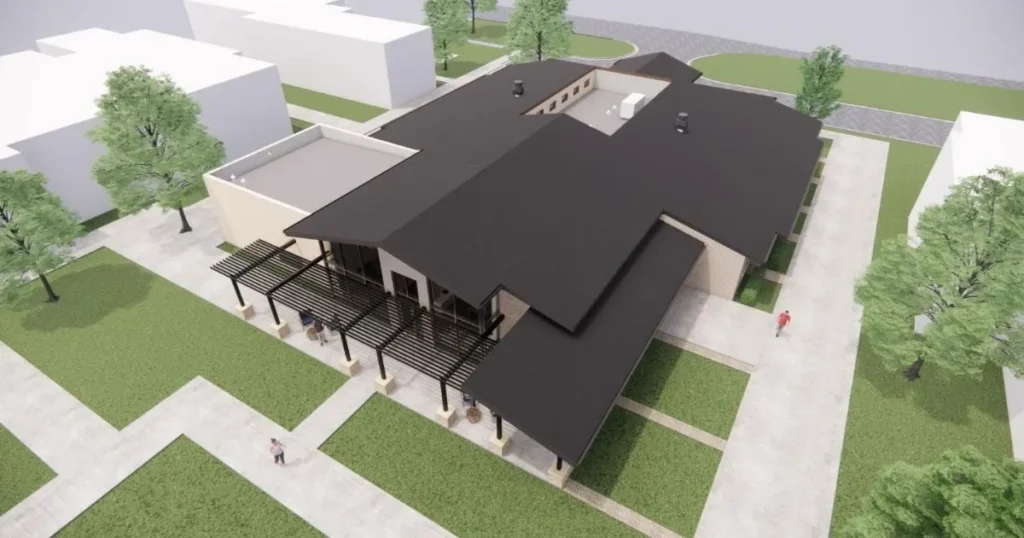
That’s the idea behind a VA Community Living Center (CLC), and it’s exactly what O’Brien Engineering helped bring to life at the George H. O’Brien, Jr. VA Medical Center in Big Spring, Texas.
Table of Contents
What Is a VA Community Living Center?
VA Community Living Centers are part of the VA’s long-term care network, serving veterans who need extended support—whether for rehabilitation, ongoing care, or end-of-life services.
Across the country, there are more than 130 of these facilities, all built around a common mission:
- Help veterans regain independence whenever possible
- Support long-term health and mobility
- Provide comfort, dignity, and quality of life
But how those goals are delivered has changed significantly over time.
Moving Away from Institutional Design
Historically, long-term care facilities were designed for operational efficiency. Think long corridors, centralized nursing stations, and spaces that felt more clinical than personal.
Today, the VA is shifting toward a very different model—one that prioritizes resident experience, familiarity, and comfort. The Big Spring project reflects that shift. Instead of expanding within a traditional hospital setting, OEI helped design a new, purpose-built, residential-style facility. This smaller, cottage-like environment changes how care is experienced day to day.
Designing a Space That Feels Like Home
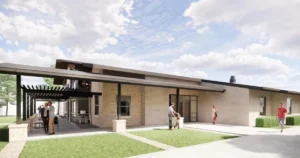
At Big Spring, OEI developed a compact, approximately 8,500 SF facility designed to house a small group of residents in a more personal setting. The difference is intentional.
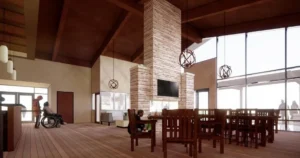
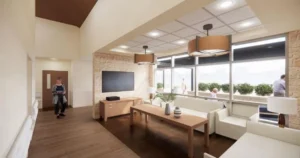
Rather than feeling like a medical unit, the space is scaled to feel like a home—something that can make a real impact on quality of life.
That shows up in a few key ways:
- Smaller living environment: The facility is designed for a limited number of residents, creating a quieter, more comfortable setting.
- Personalized spaces: Residents are encouraged to bring their own belongings and make the space their own, reinforcing a sense of ownership and familiarity.
- Welcoming shared areas: The layout supports family visitation and social interaction in a way that feels natural, not clinical.
- Connection to everyday life: In some cases, accommodations are even made for pets, helping residents maintain meaningful connections.
It’s a shift from “facility” to “community,” and that shift starts with design.

Where Engineering Still Matters
Even in a residential-style setting, the technical side of the project is just as important.
Facilities like this still require:
- Reliable building systems
- Efficient space planning for staff and care delivery
- Code compliance and life safety integration
- Long-term durability and ease of maintenance
The difference is that all of that has to happen without disrupting the residential feel.
The balance between performance and experience is where architecture and engineering have to work together.
For OEI, this Project Goes Beyond Design
As a Service-Disabled Veteran-Owned Small Business (SDVOSB), there’s a personal connection to the end users of the facility. It’s not just about meeting requirements; it’s about understanding how residents and staff will actually use the space, and what matters to the people living there.
That perspective shows up in the details:
- Prioritizing comfort alongside functionality
- Supporting independence where possible
- Creating spaces that feel familiar, not institutional
The Value of a Veteran-Owned Perspective
Projects like this highlight why SDVOSB firms continue to play an important role in VA work.
Callout: “Veterans Working for Veterans”
Working with a veteran-owned A/E firm brings:
- A deeper understanding of the veteran community
- Alignment with the VA’s mission and priorities
- Experience navigating federal standards and processes
That combination helps ensure projects are not only technically sound, but also grounded in purpose.
A Different Kind of Healthcare Environment
The VA Community Living Center at Big Spring is part of a larger shift in how healthcare facilities are designed, especially in long-term care.
It reflects a growing recognition that:
- Environment affects recovery and well-being
- Comfort and familiarity matter
- Design can support dignity, independence, and connection
And while none of that replaces clinical care, it enhances it in ways that are just as important.
Not every healthcare project is about speed and efficiency. Some are about quality of life. At Big Spring, the goal wasn’t just to build a facility; it was to create a place where veterans feel comfortable, supported, and at home. That’s a different kind of success, one that starts with thoughtful, intentional design.