
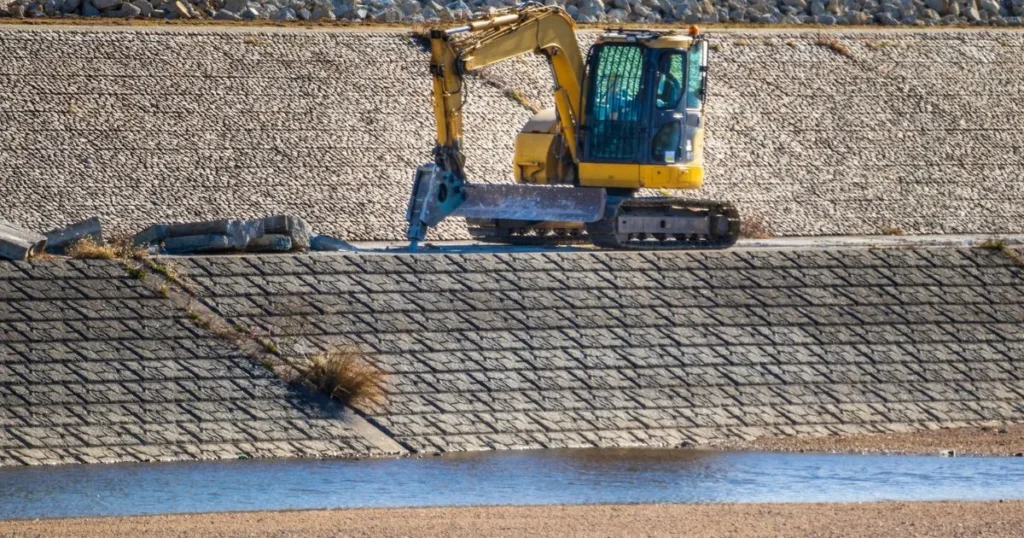
Flood protection infrastructure rarely fails without warning. In most cases, dams and levees deteriorate gradually, responding to repeated flood loading, aging materials, and changing environmental conditions.
The challenge is that many of the most serious risks are not immediately visible.
Understanding how levees behave over time, how levee design influences long-term performance, and when engineering evaluation is required is essential for owners responsible for public safety, regulatory compliance, and infrastructure resilience.
Table of Contents
How do Levee Failures Actually Develop?
Levees are not static barriers. They are engineered systems that respond to water, soil behavior, and repeated loading events.
Common contributors to levee failure include:
- Repeated flooding that weakens embankment materials over time
- Internal seepage paths that develop before surface signs appear
- Increased runoff caused by upstream development
- Aging systems built to outdated assumptions
Effective levee design accounts for these factors early, reducing the likelihood that small issues escalate into emergency conditions.
Why are Surface Inspections Not Enough?
Traditional levee inspections often focus on visible signs of distress such as erosion, cracking, or settlement. While these indicators are important, they rarely tell the full story.
Many performance issues develop internally and require engineering analysis to identify. Modern design and evaluation combine field inspections with:
- Hydraulic and hydrologic modeling
- Embankment stability and seepage analysis
- Inundation mapping to understand downstream risk
This integrated approach provides a clearer picture of how a levee is likely to perform during future flood events, not just how it appears today.
What Does Effective Levee Design Actually Involve?
O’Brien Engineering, Inc. has been providing dam and levee safety services for nearly four decades. That work extends beyond drawings and calculations into the full lifecycle of water infrastructure.
This typically involves:
- Evaluating existing levee condition and performance
- Understanding site-specific hydrologic and soil conditions
- Identifying failure mechanisms and risk drivers
- Developing rehabilitation or design strategies that improve long-term reliability
- Supporting permitting, construction, and ongoing safety requirements
This approach supports municipal, state, federal, and private owners who must balance safety, regulatory obligations, and budget constraints.
When Does Design and Engineering Support Become Critical?
Many owners are unsure when a condition requires engineering involvement. Common indicators include:
- Repeated flooding or near overtopping events
- Visible erosion, seepage, or settlement
- Changes in upstream land use or drainage patterns
- Updated regulatory requirements or safety classifications
- Aging levees approaching or exceeding their original design life
Addressing these conditions early through assessment and updated levee design is often more cost-effective than emergency repair or post-failure response.
Experience Across Diverse Levee Systems
OEI has supported dam and levee safety efforts for municipal, state, federal, and private clients across the United States. Projects range from inspections and emergency action planning to full rehabilitation and redesign.
This experience includes working within local, state, and federal permitting frameworks and understanding how design decisions affect long-term operations, maintenance, and risk exposure.
Designing for Long-Term Levee Performance
Effective flood protection is not achieved through reactive fixes. It is built through informed planning, ongoing evaluation, and levee design strategies that reflect how systems actually behave over time.
By combining inspection, modeling, and rehabilitation planning, owners can reduce flood risk, meet regulatory expectations, and extend the service life of critical infrastructure. Our team is ready to help.