
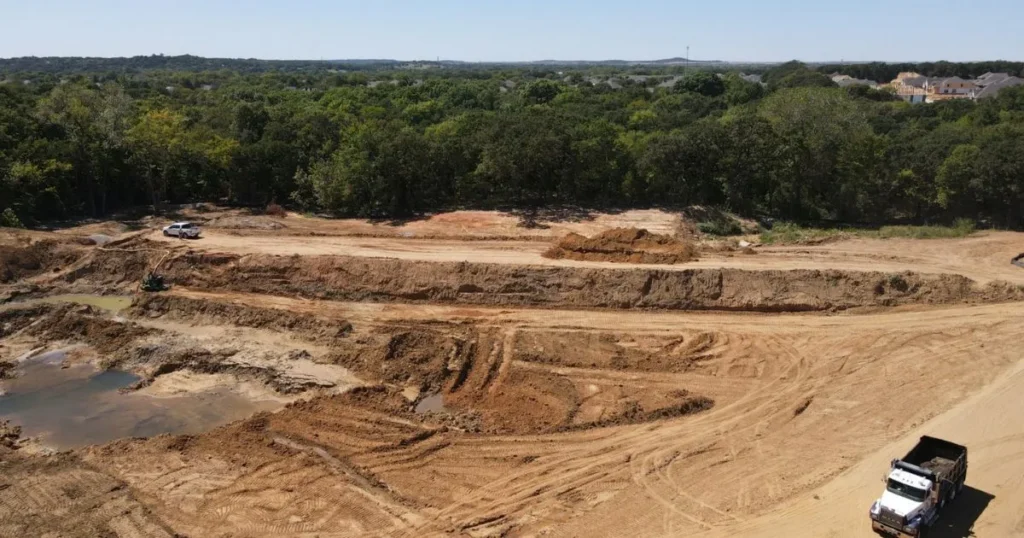
Civil engineering projects take place in the real world, and the real world has rivers, wetlands, floodplains, aquifers, and ecosystems that do not pause for construction schedules. Environmental licenses and permits are the legal framework that governs how infrastructure projects interact with those natural systems, from the first equipment on site through the life of the completed facility.
For project owners, municipalities, and federal agencies, understanding which environmental licenses and permits apply to a project, who issues them, and what they require is not optional. Operating without the correct authorizations exposes project sponsors to stop-work orders, fines, project delays, and legal liability. And in 2026, the permitting landscape has changed significantly enough that past experience alone is not sufficient guidance.
Table of Contents
What Is the Difference Between an Environmental Permit and an Environmental License?
Both environmental licenses and permits are legally binding documents issued by government agencies to authorize specific activities or ongoing operations that could affect the environment. They are not interchangeable, and most projects require both.
An environmental permit is typically issued for a specific activity or phase of a project. It authorizes that activity to proceed under defined conditions designed to protect the environment. A permit for discharging stormwater during construction, for example, specifies what best management practices must be in place, how runoff must be managed, and what documentation must be maintained. Permits are time-limited, site-specific, and tied to a defined scope of work.
An environmental license generally applies to an ongoing operation, process, or facility rather than a one-time activity. A license may govern how a completed facility handles waste disposal, manages emissions, or interacts with a regulated waterway over time. Where a permit controls what happens during construction, a license often governs what happens during operation.
Because each document serves a different regulatory purpose, most civil engineering projects require both environmental licenses and permits across multiple issuing agencies, each with its own jurisdiction, timeline, and submittal requirements.
The Major Federal Environmental Permits for Civil Engineering Projects
Most civil engineering projects near water trigger one or more of the following federal authorizations:
- Section 404 Permit (Clean Water Act): Required for any discharge of dredged or fill material into waters of the U.S., including wetlands and streams. Triggered by road crossings, bridge construction, dam and levee work, and site grading near water bodies. Most projects qualify for a Nationwide Permit (NWP) rather than an Individual Permit. The 2026 NWPs, reissued by USACE on January 7, 2026, went into effect March 15, 2026, and expire March 15, 2031. Projects not under construction or contract by March 14, 2026, must seek authorization under the 2026 NWPs. Verify applicable regional conditions, as division commanders may add local requirements.
- Section 10 Permit (Rivers and Harbors Act): Required for structures or work in or affecting navigable waters, including bridges, piers, bulkheads, and wharves. The 2026 NWPs cover many Section 10 activities, so a single NWP verification often satisfies both Section 404 and Section 10 requirements for qualifying projects.
- Section 401 Water Quality Certification: Required before USACE can issue a Section 404 or Section 10 permit. Confirms the project will not violate state water quality standards. In Texas, issued by TCEQ. The 2023 EPA rule requires states to act on certification requests within one year.
- ESA Section 7 Consultation / Section 10 Incidental Take Permit: Projects with a federal nexus that may affect listed species or critical habitat must complete Section 7 consultation with USFWS or NOAA Fisheries before a federal permit can be issued. Projects without a federal nexus that may take a listed species require a Section 10 Incidental Take Permit. This is frequently underestimated in project scheduling.
Key Texas State Environmental Permits for Civil Engineering Projects
In Texas, state-level environmental licenses and permits are primarily administered by TCEQ under the Texas Water Code and the Texas Health and Safety Code. The permits most frequently required for civil engineering projects include:
- Construction General Permit (CGP, TXR150000): Required for any construction activity disturbing one or more acres of soil in Texas. Operators must develop and implement a Stormwater Pollution Prevention Plan (SWP3) and submit a Notice of Intent (NOI) through TCEQ’s STEERS online system before construction begins. The current CGP was renewed effective March 5, 2023.
- Multi-Sector General Permit (MSGP, TXR050000): Governs stormwater discharges from industrial facilities. The current MSGP was amended effective May 7, 2025. TCEQ is now in the renewal process for the 2026 MSGP, which will replace the current permit when it expires August 14, 2026.
- TPDES Individual Permits: Required for wastewater discharges that cannot be authorized under a general permit. These project-specific permits require a formal application, technical review, and public notice process that can take significantly longer than general permit authorizations.
- Dam Safety Permits (Chapter 299, Texas Administrative Code): Required for the construction, modification, or repair of dams subject to TCEQ jurisdiction. Dam safety permits require engineering plans and specifications, hydrologic and hydraulic analysis, and TCEQ review before construction may begin.
- TCEQ Water Rights Permits: Required for any appropriation of surface water from Texas rivers, lakes, or streams. Water rights permitting is administered under the Texas Water Code and can be one of the most complex and time-intensive permit processes for water infrastructure projects.
Why the Permitting Process Is More Complex Than It Appears
Permitting is not a checklist, it is an integrated part of project design. The permits a project requires, and how long they take, are shaped by decisions made long before any application is submitted. Common complexity drivers include:
- Multi-agency overlap: A single project can trigger simultaneous requirements from USACE, TCEQ, FEMA, USFWS, and local authorities. Each uses different application formats, timelines, and review criteria.
- Sequential dependencies: Some permits cannot be submitted until others are approved. A delay in one authorization can stall the entire project schedule.
- Design decisions that trigger additional permits: Site selection, project footprint, and construction sequencing all affect which authorizations are required. A minor alignment shift can move a project from a Nationwide Permit into an Individual Permit process, adding months to the schedule.
- Evolving regulatory requirements: Permit requirements change. The 2026 USACE Nationwide Permits replaced the 2021 NWPs as of March 15, 2026. Projects operating under outdated permit assumptions face compliance risk.
- Species and habitat triggers: Projects near listed species or critical habitat require ESA Section 7 consultation, which must be completed before a federal permit can be issued. This is frequently underestimated in project scheduling.
Early permitting strategy, integrated with project design from day one, is the most effective way to prevent costly delays. Projects that permit efficiently do so because the engineering team understood the regulatory landscape before the first line was drawn.
How O'Brien Engineering Navigates Environmental Licenses and Permits for Clients
O’Brien Engineering has spent nearly four decades building the regulatory knowledge, agency relationships, and technical capabilities required to move environmental licenses and permits efficiently for complex civil engineering projects. Our water resources and civil engineering teams understand that permits are not a separate workstream from design. They are a design constraint, and the most effective permit strategies are built into the project from the start.
Our track record reflects this approach. O’Brien Engineering has submitted and received approval on over 1,000 FEMA Letter of Map Change requests, with a 100 percent approval rate. We have navigated TCEQ’s dam safety permitting process for multiple high-hazard dam rehabilitation projects, coordinated Section 404 and Section 401 authorizations for streambank stabilization work across Texas municipalities, and supported USACE permitting for federal military and VA healthcare facility projects nationwide.
O’Brien Engineering’s environmental licenses and permits services include:
- Section 404 Nationwide Permit verification and Individual Permit applications
- TCEQ Construction General Permit NOI preparation and SWP3 development
- Section 401 water quality certification coordination
- FEMA floodplain development permitting and Letter of Map Change preparation
- TCEQ dam safety permit applications and technical submittals
- Endangered Species Act Section 7 consultation support
- Multi-agency permitting strategy and schedule coordination
- Construction phase compliance monitoring and permit closeout
Explore O’Brien Engineering’s Water Resources capabilities and Dam and Levee Safety services to see how our permitting expertise supports projects across Texas and the nation. Contact O’Brien Engineering today to discuss the environmental licensing and permitting needs for your next project.
Key Takeaways
- Environmental permits authorize specific construction-phase activities under defined conditions; environmental licenses govern ongoing operations of a completed facility. Most civil engineering projects require both.
- The 2026 USACE Nationwide Permits went into effect March 15, 2026, replacing the 2021 NWPs. Projects not under construction or contract by March 14, 2026, must seek authorization under the new 2026 NWPs.
- In Texas, the TCEQ Construction General Permit (TXR150000) is required for any project disturbing one or more acres of soil. The MSGP for industrial facilities expires August 14, 2026, and renewal is currently underway.
- Most civil engineering projects in Texas require simultaneous coordination across multiple agencies including USACE, TCEQ, FEMA, and USFWS. Delays in any single permit can halt the entire project.
- Early permitting strategy, integrated with project design, is the most effective way to prevent costly delays. O’Brien Engineering has a 100 percent approval rate on over 1,000 FEMA Letter of Map Change submittals.