
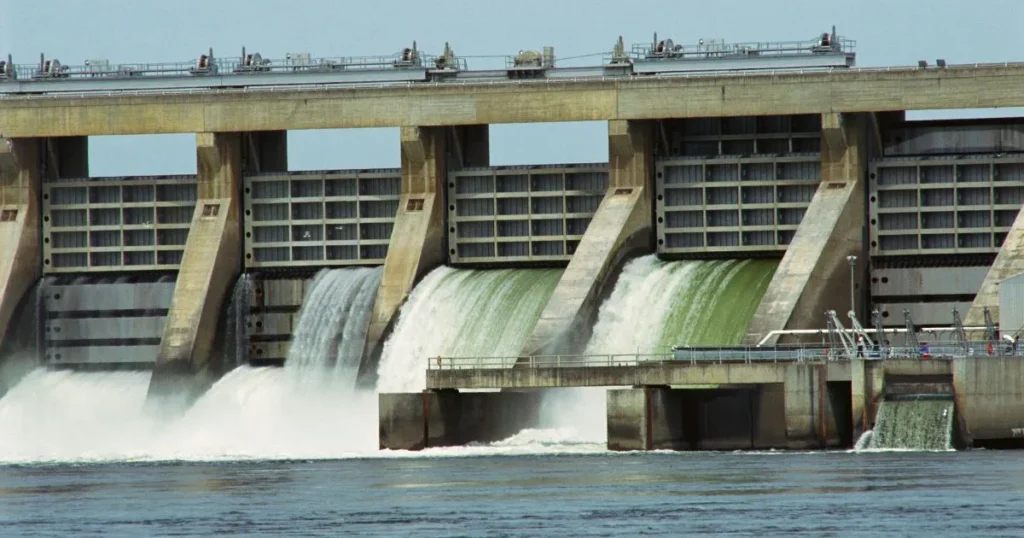
Dam rehabilitation decisions depend on understanding how a structure is performing today and expected performance under future conditions. Facility condition assessments provide the technical foundation for these decisions by evaluating safety, function, and long-term reliability before rehabilitation strategies are defined.
Table of Contents
By collecting and analyzing detailed condition data, engineers can identify risks, prioritize repairs, and develop rehabilitation plans that extend service life while maintaining regulatory compliance and public safety.
How facility condition assessments support dam rehabilitation
A facility condition assessment evaluates the physical and operational condition of a dam or related infrastructure. The findings determine how well a structure is functioning and where deficiencies may affect safety, performance, or longevity.
For dam rehabilitation projects, condition assessments help engineers:
- Identify structural and material deficiencies
- Evaluate operational and hydraulic performance
- Understand the root causes of deterioration
- Define the scope and urgency of rehabilitation efforts
- Support defensible repair and upgrade recommendations
Rather than relying on assumptions or isolated observations, condition assessments provide data-driven insight that guides effective rehabilitation planning.
Applying assessment findings to rehabilitation planning
Dam rehabilitation often involves balancing safety, cost, constructability, and long-term performance. Condition assessment findings enable engineers to translate inspection results into actionable rehabilitation strategies that align with federal dam safety guidelines established by the Federal Emergency Management Agency.
Assessment data is commonly used to:
- Compare repair versus replacement options
- Prioritize phased rehabilitation efforts
- Select appropriate materials and construction methods
- Support permitting, funding, and regulatory coordination
- Reduce uncertainty during design and construction
This approach helps ensure that rehabilitation investments address underlying issues rather than temporary symptoms.
Lessons from water infrastructure rehabilitation projects
Rehabilitation efforts across aging water infrastructure continue to demonstrate the value of thorough condition assessment. In many cases, damage caused by seismic or environmental events reveals pre-existing deterioration that had not yet reached visible failure.
Engineering teams have successfully applied modern materials and reinforcement techniques when assessments identified corrosion, material degradation, or loss of structural capacity. These projects highlight how early evaluation and targeted rehabilitation can restore function, improve long-term resilience, and reduce future risk.
Experience supporting dam rehabilitation projects
O’Brien Engineering provides facility condition assessments and rehabilitation planning support for dams and related infrastructure. We work with public agencies and infrastructure owners to evaluate existing conditions, define rehabilitation needs, and support project delivery in alignment with the U.S. Army Corps of Engineers Levee Safety Program.
OEI experience includes condition assessments and analysis for national-level clients such as the U.S. Army Corps of Engineers and U.S. Customs and Border Protection. Related services include flood damage assessment, GIS mapping, water system upgrades, and coordination for FEMA permitting and grant reviews.
By integrating assessment findings with practical engineering judgment, OEI supports rehabilitation projects that improve safety, performance, and long-term sustainability.
Plan rehabilitation efforts with reliable condition data
Dam rehabilitation projects are most effective when grounded in accurate, objective condition data. Facility condition assessments help infrastructure owners understand current risks, plan responsible investments, and avoid costly surprises during rehabilitation.
Partner with O’Brien Engineering to evaluate existing conditions and plan rehabilitation strategies grounded in accurate, defensible data that support long-term infrastructure performance.